.png)

Are you ready to dive into the world of flavorful dishes? In this guide, I’ll show you how to make a simple and delicious Vegetable Biryani that will delight your taste buds. With easy-to-follow steps and fresh ingredients, you’ll create a meal that impresses everyone. Plus, I’ll share tips, variations, and storage advice so your Biryani will shine every time you make it. Let’s get cooking!
Why I Love This Recipe
- Flavorful and Aromatic: This vegetable biryani is packed with spices that create a rich and inviting aroma, making it irresistible.
- Customizable: You can easily swap in your favorite vegetables or adjust the spice levels to suit your taste.
- Perfect for Meal Prep: This dish stores well and can be enjoyed as leftovers, making it a great option for busy weeknights.
- Vegetarian Delight: Loaded with nutritious vegetables and fragrant basmati rice, this biryani is a wholesome meal for everyone.
Ingredients for Vegetable Biryani
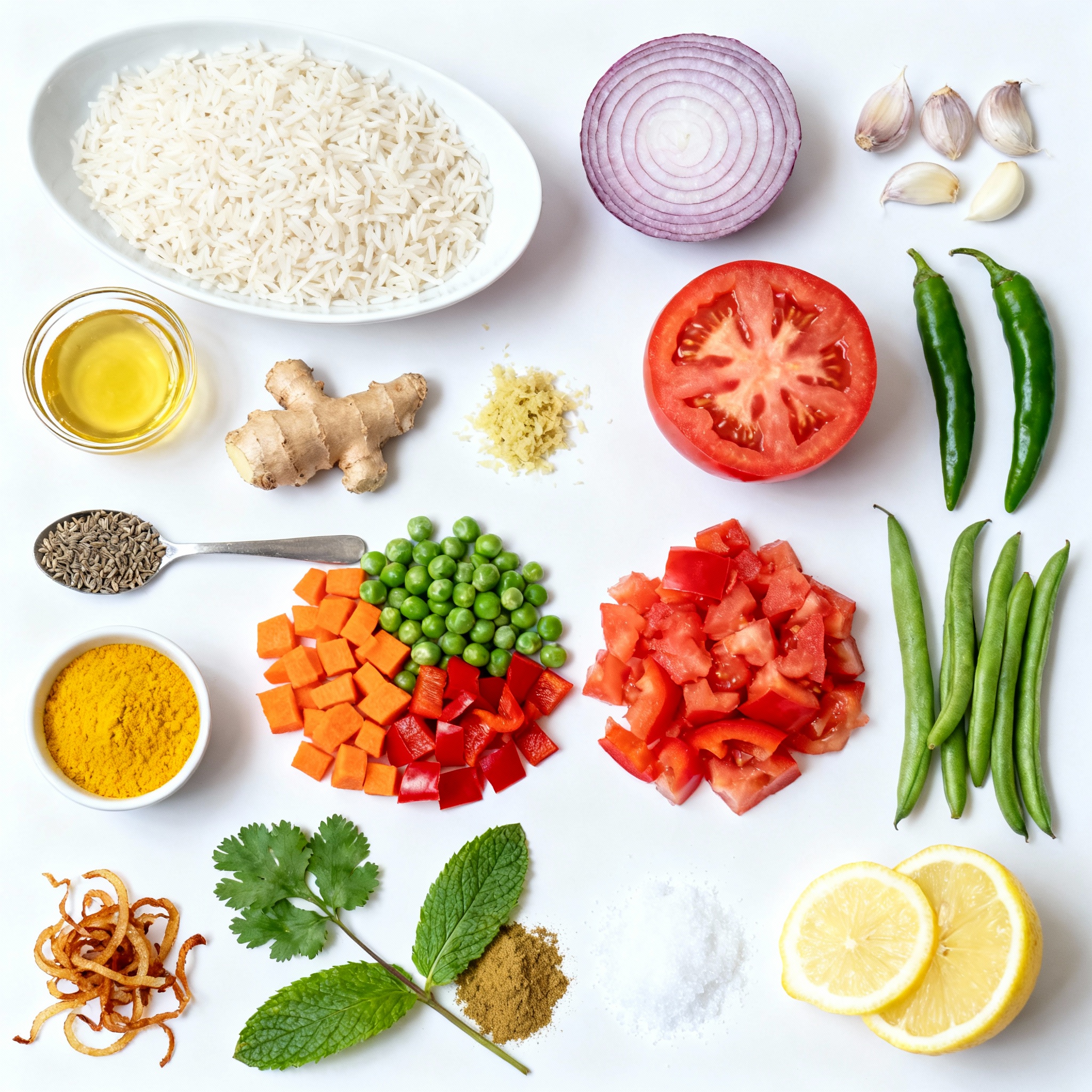
To make a tasty Vegetable Biryani, you need a few key ingredients. Here is what you will need:
– Main ingredients:
– 1 ½ cups basmati rice
– 1 large onion, thinly sliced
– 3 garlic cloves, minced
– 1-inch ginger, grated
– 1 green chili, slit (optional)
– 1 cup mixed vegetables (carrots, peas, bell peppers, green beans)
– 1 large tomato, chopped
– 1 teaspoon cumin seeds
– 1 teaspoon coriander powder
– ½ teaspoon turmeric powder
– 1 teaspoon garam masala
– Salt, to taste
– 2 cups vegetable broth or water
– Additional ingredients:
– 2 tablespoons ghee or vegetable oil
– Fresh cilantro and mint leaves for garnish
– Fried onions and lemon wedges for serving (optional)
When it comes to serving, you can pair your biryani with raita, a cool yogurt sauce, or a fresh salad. This adds a nice balance to the dish.
Step-by-Step Instructions
Preparation Steps
Soaking and preparing the rice
Start by rinsing the basmati rice under cold water. Do this until the water runs clear. Soak the rice in water for 30 minutes. This helps the rice cook evenly. After soaking, drain the rice and set it aside.
Sautéing the aromatics
In a large pan, heat 2 tablespoons of ghee or vegetable oil over medium heat. Add 1 teaspoon of cumin seeds and let them sizzle for a few seconds. Next, add 1 large onion, thinly sliced. Sauté until the onion turns golden brown. Now, add 3 minced garlic cloves, 1-inch grated ginger, and a slit green chili if you like heat. Sauté for another minute until fragrant.
Cooking the vegetables
Stir in 1 chopped large tomato. Cook until it softens and breaks down. Then, add 1 cup of mixed vegetables, such as carrots, peas, bell peppers, and green beans. Sprinkle in 1 teaspoon coriander powder, ½ teaspoon turmeric powder, 1 teaspoon garam masala, and salt to taste. Mix well and cook for about 5-7 minutes until the vegetables are tender.
Combining the Ingredients
Adding soaked rice to the pan
Now it’s time to add the soaked and drained rice to the pan. Gently stir to combine the rice with the vegetables and spices.
Pouring in broth or water
Next, pour in 2 cups of vegetable broth or water. Bring the mixture to a boil.
Cooking and resting time
Once it boils, reduce the heat to low. Cover the pot and let it simmer for about 20 minutes. This allows the rice to absorb the liquid and flavors. After 20 minutes, turn off the heat and let it sit for another 10 minutes to meld the flavors. Fluff the biryani with a fork, and serve with fresh cilantro, mint leaves, and optional fried onions. For a refreshing touch, add lemon wedges on the side.
Pro Tips
- Soak the Rice: Soaking the basmati rice for at least 30 minutes helps to achieve fluffy and non-sticky grains. It also reduces cooking time.
- Use Fresh Spices: For the best flavor, use whole spices and grind them fresh. This enhances the aroma and taste of your biryani.
- Layering Techniques: When adding the rice to the vegetable mixture, consider layering it instead of stirring. This helps to maintain the texture of the rice.
- Resting Time: Letting the biryani rest for 10 minutes after cooking allows the flavors to meld beautifully. Cover it to keep it warm during this time.
Tips & Tricks
Perfecting the Cooking Process
To make your vegetable biryani perfect, focus on the rice. Start with high-quality basmati rice. The right texture is fluffy, not sticky. Rinse the rice well to remove excess starch. Soak it for 30 minutes to help it cook evenly. This step makes a big difference.
Seasoning is key to great flavor. Use fresh ingredients like garlic and ginger. These add depth to your dish. Also, don’t forget the spices. The right mix of cumin, coriander, and garam masala brings warmth. Taste as you cook to adjust the seasoning.
Spice levels can be adjusted to fit your taste. If you love heat, add more green chili. For milder biryani, skip the chili or use less. You can always add a sprinkle of chili powder later. Balance is important, so taste throughout the cooking process.
Enhancements for Extra Flavor
Want to elevate your biryani? Try adding extra spices. A dash of cardamom or cinnamon can enhance the aroma. Fresh herbs like mint and cilantro also add brightness. These can be mixed in or used as a garnish.
For firmer rice, consider a different cooking method. Use the pot-in-pot technique. Place the soaked rice above the vegetable mix in a steaming basket. This helps the rice stay fluffy while absorbing flavors. It’s a great way to achieve that perfect texture.
These tips will help you create a flavorful and simple vegetable biryani.
Variations of Vegetable Biryani
Regional Variations
Vegetable biryani varies across India. In South India, biryani uses coconut and curry leaves. This adds a rich, unique taste. You might find spices like fennel and star anise in this version. It often has a little more heat, too.
In North India, biryani tends to be more aromatic. It uses saffron and a mix of rich spices. This style focuses on layering rice and meat or veggies. This creates a beautiful presentation and deep flavors. Each region has its own twist, making every biryani special.
Other Ingredient Options
You can switch out the vegetables in your biryani based on what’s in season. Try using zucchini in summer or pumpkin in fall. Seasonal veggies keep your dish fresh and exciting. Mixing different colors also makes it visually appealing.
Adding protein can make your biryani heartier. Tofu is a great plant-based choice. It absorbs flavors well and adds protein. Chickpeas are another option. They add a nice texture and help fill you up. These choices make your vegetable biryani versatile and satisfying.
Storage Information
Refrigeration Tips
When you have leftover Vegetable Biryani, store it in an airtight container. This keeps the flavor fresh and safe. Let it cool down before sealing it. Vegetable Biryani can last in the fridge for about 3 to 4 days. If you want to enjoy it later, make sure to check for any signs of spoilage before eating.
Freezing Guidelines
Yes, you can freeze Vegetable Biryani! It freezes well and makes for a quick meal later. Just let it cool completely, then transfer it to a freezer-safe container. Vegetable Biryani can last in the freezer for about 2 to 3 months.
To thaw, take it out of the freezer and place it in the fridge overnight. For reheating, you can use a microwave or stove. If using the stove, add a splash of water to prevent it from drying out. Heat it on low until warm. Enjoy your tasty biryani anytime!
FAQs about Vegetable Biryani
Common Questions
What is the difference between Biryani and Pulao?
Biryani and Pulao are both rice dishes but differ in cooking style. Biryani layers marinated meat or vegetables with rice. Pulao mixes rice and spices together, often cooked in one pot. Biryani has more flavors and is richer than Pulao.
How can I make Vegetable Biryani spicier?
To make Vegetable Biryani spicier, add more green chilies or red chili powder. You can also include spicy spices like black pepper or cayenne. Adjust the heat level to your taste for a bolder dish.
Can I use brown rice instead of basmati?
Yes, you can use brown rice instead of basmati. Brown rice is healthier and adds a nutty flavor. However, it takes longer to cook, so adjust the cooking time accordingly.
Nutritional Benefits
Is Vegetable Biryani healthy?
Yes, Vegetable Biryani is healthy. It includes a variety of vegetables, rice, and spices. This dish is rich in fiber, vitamins, and minerals. Using ghee or oil in moderation helps keep it balanced.
What are the nutritional values per serving?
A serving of Vegetable Biryani has about:
– 300-400 calories
– 10-15 grams of protein
– 50-60 grams of carbohydrates
– 5-7 grams of dietary fiber
These values can vary based on portion size and added ingredients.
Serving Suggestions
What to serve with Vegetable Biryani?
You can serve Vegetable Biryani with raita, a yogurt-based side. It cools the spice and adds flavor. You can also enjoy it with a fresh salad or pickles for extra zest.
Best side dishes or chutneys to complement the dish
Pairing chutneys like mint or tamarind adds a tasty contrast. You may also like crispy papadums or naan bread on the side. These options enhance the meal and make it more enjoyable.
Vegetable biryani is a tasty dish with rich flavors and textures. You learned about key ingredients, step-by-step cooking, and helpful tips. I shared ways to store leftovers and variations from different regions. You can even switch up the veggies based on what’s in season. With all this, you can make the perfect biryani. Enjoy crafting your dish, and don’t hesitate to experiment for your own twist!