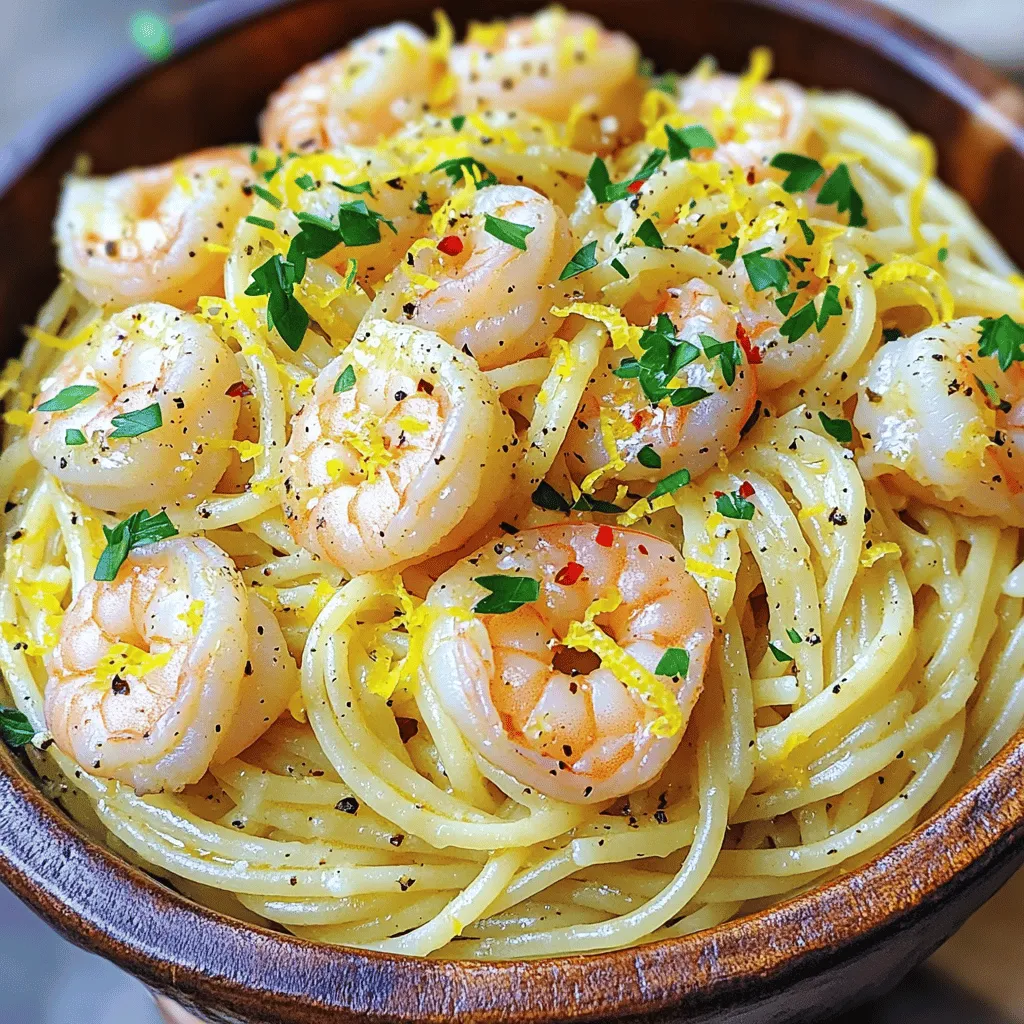
If you’re seeking a quick, delicious dinner that impresses, look no further! This Lemon Garlic Shrimp Pasta is the answer. With just a few key ingredients and easy steps, you’ll whip up a meal that’s both flavorful and satisfying. Whether you’re a busy parent or a novice cook, I’ll guide you through each part for a seamless cooking experience. Get ready to savor fresh shrimp in a bright, zesty sauce—you won’t want to miss this!
Why I Love This Recipe
- Quick and Easy: This lemon garlic shrimp pasta can be prepared in just 30 minutes, making it a perfect weeknight dinner option.
- Fresh Flavors: The combination of lemon juice, zest, and garlic creates a bright, refreshing flavor that complements the shrimp beautifully.
- Customizable: You can easily adjust the spice level by adding more or less red pepper flakes, or substitute different types of pasta based on your preference.
- Healthy and Satisfying: With shrimp as the main protein source and a light sauce, this dish is both nutritious and satisfying without being heavy.
Ingredients
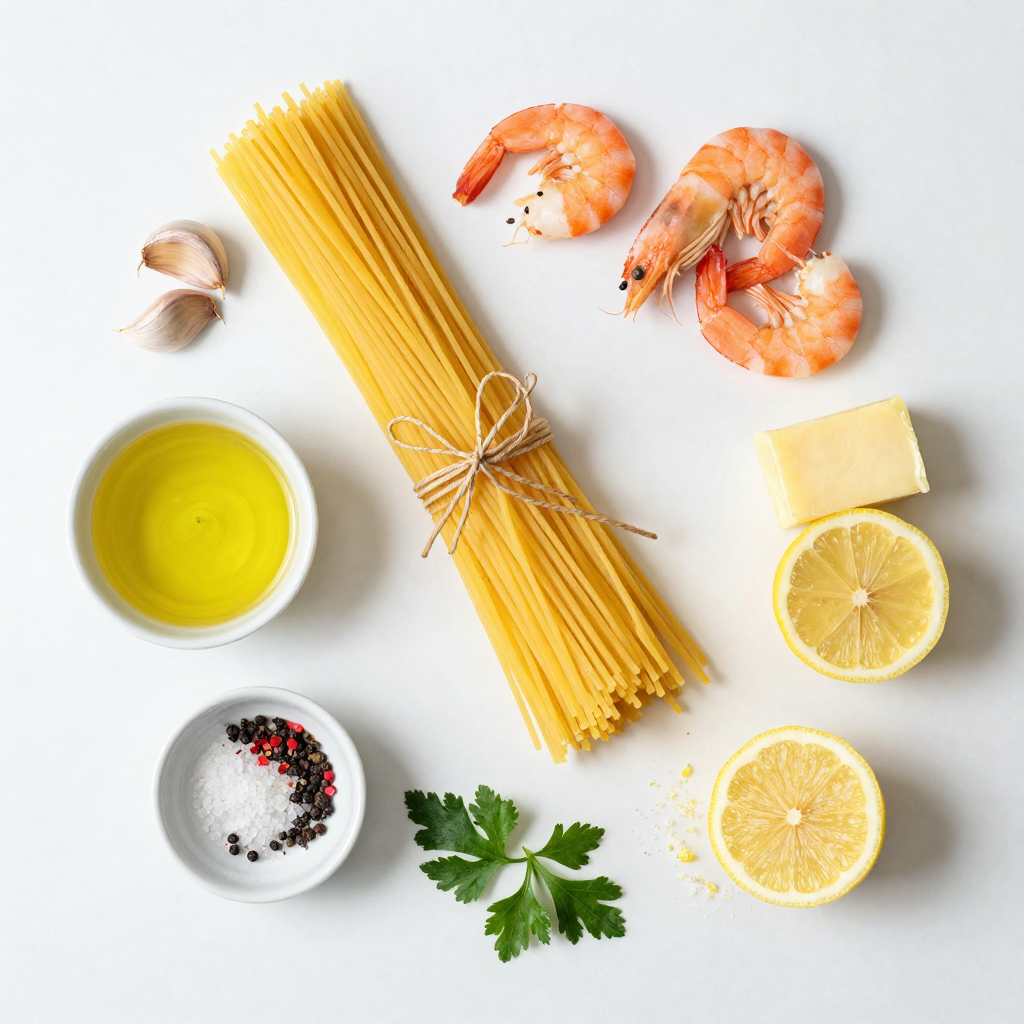
List of Key Ingredients
– 8 ounces spaghetti or linguine
– 1 pound large shrimp, peeled and deveined
– 4 cloves garlic, minced
– 2 tablespoons olive oil
– 2 tablespoons unsalted butter
– Zest of 1 lemon
– 2 tablespoons fresh lemon juice
– 1/4 teaspoon red pepper flakes (optional)
– Salt and pepper to taste
– 1/4 cup freshly chopped parsley
– Grated Parmesan cheese for serving (optional)
Measurements and Proportions
Use precise measurements for each ingredient. This helps create the best taste. Fresh ingredients matter a lot in this dish. Fresh shrimp, garlic, and herbs make a big difference. Always choose the best quality you can find.
Suggested Variations and Additions
You can add red pepper flakes for heat. Toss in some spinach or cherry tomatoes for color and nutrition. If you need gluten-free options, use gluten-free pasta. This way, everyone can enjoy this tasty meal! Explore these variations to make the dish your own.
Step-by-Step Instructions
Cooking the Pasta
To cook the pasta perfectly, start by boiling salted water in a large pot. Use enough water to let the pasta move freely. Once the water boils, add 8 ounces of spaghetti or linguine. Cook it according to the package instructions until it is al dente. This usually takes about 8 to 10 minutes.
Make sure to reserve 1 cup of pasta water before draining. This water is starchy and helps to bind the sauce later.
Sautéing the Shrimp
While the pasta cooks, heat a large skillet over medium heat. Add 2 tablespoons of olive oil and 1 tablespoon of butter. Let the butter melt fully. Then, add 4 cloves of minced garlic and 1/4 teaspoon of red pepper flakes if you like some heat. Sauté for about 1 minute.
Next, add 1 pound of large shrimp in a single layer. Season with salt and pepper. Cook for 2 to 3 minutes on one side until they turn pink. Flip them and cook for another 1 to 2 minutes. Do not overcook; they should be firm and opaque. Once done, remove the shrimp from the skillet and set them aside.
Combining Flavors
In the same skillet, add the drained pasta. Pour in 1/2 cup of the reserved pasta water. Add the lemon zest and lemon juice. Toss everything gently over medium heat. The pasta should be coated in the sauce. If it looks dry, add more pasta water slowly until you reach the right consistency.
Finally, return the cooked shrimp to the skillet. Mix well to combine all the flavors. Adjust seasoning with more salt, pepper, or lemon juice if needed. Serve the pasta hot, and enjoy your delicious meal!
Pro Tips
- Fresh Ingredients: Using fresh shrimp and ingredients will enhance the flavor of the dish significantly.
- Reserve Pasta Water: Always reserve some pasta water before draining; it helps to create a creamy sauce when combined with the pasta.
- Don’t Overcook Shrimp: Cook the shrimp just until they turn pink and opaque; overcooking can make them tough and rubbery.
- Variations: Feel free to add vegetables like spinach or cherry tomatoes for added color and nutrition.
Tips & Tricks
Enhancing Flavor
Seasoning is key. Always add salt and pepper at every cooking step. This builds depth. Fresh herbs brighten dishes. Try parsley, basil, or chives as garnishes. They add color and taste.
Time-Saving Techniques
Prep ingredients first. Chop garlic and parsley ahead of time. Keep shrimp ready to cook. Use a garlic press to save time. A non-stick skillet helps cook shrimp evenly. This way, you finish fast.
Common Mistakes to Avoid
Do not overcook shrimp. They should turn pink and curl slightly. If they look rubbery, they cooked too long. For pasta, make sure to use enough water. Too little makes it sticky. Always reserve pasta water; it helps mix flavors later.
Variations
Ingredient Swaps
You can change the proteins in this dish. Try using scallops or chicken instead of shrimp. Both options bring their own unique flavors.
For a vegetarian twist, mushrooms or zucchini work well. Slice the mushrooms or cubes of zucchini. They add a nice texture and absorb flavors well.
Flavor Profiles
Herbs can change the taste a lot. Try adding fresh basil or thyme for a different twist. These herbs add fresh notes that brighten the dish.
If you want a richer taste, consider adding cream. Mixing in a bit of cream can make the sauce silky and smooth. You could also try different sauces to find what you love.
Serving Suggestions
Pair your pasta with a side salad or garlic bread. These dishes enhance the meal and add variety.
Wine can also make a great pairing. A crisp white wine like Sauvignon Blanc matches well with shrimp and lemon.
For a beautiful plate, arrange the pasta in a nest shape. Top it with shrimp, a sprinkle of parsley, and lemon zest. This makes it look restaurant-worthy.Enjoy exploring these variations!
Storage Info
Short-term Storage
To keep your Lemon Garlic Shrimp Pasta fresh, store it in an airtight container. Place it in the fridge within two hours of cooking. This dish stays fresh for up to three days. If you want to keep it longer, freezing is a better option.
Reheating Instructions
When reheating, use the stovetop for the best results. Add a splash of reserved pasta water to keep it moist. Heat over low to medium heat. Stir gently until warm. This method helps retain the dish’s flavor and texture.
Freezing Tips
To freeze your pasta, let it cool completely. Then, transfer it to a freezer-safe container. It can last up to three months in the freezer. When you’re ready to eat, thaw it overnight in the fridge. Reheat it on the stovetop, adding a bit of water to bring back moisture.
FAQs
How long does it take to prepare Lemon Garlic Shrimp Pasta?
To prepare Lemon Garlic Shrimp Pasta, you need 15 minutes for prep and 15 minutes for cooking. The total time is 30 minutes. This quick meal makes it easy to enjoy gourmet flavors in no time.
Can I double the recipe for larger gatherings?
Yes, you can double the recipe easily. Just scale the ingredients accordingly. For example, use 2 pounds of shrimp and 16 ounces of pasta. Make sure to adjust the cooking times slightly, as larger amounts may take a bit longer.
What can I substitute for shrimp if I’m allergic?
If you’re allergic to shrimp, you can use chicken or scallops. Both options work well with the same flavors. You can also try mushrooms for a vegetarian twist. Just adjust the cooking time to ensure proper doneness.
What can I add to make it spicier?
To add heat to your dish, consider using hot sauce like sriracha or red pepper flakes. You can also try adding chopped jalapeños or a dash of cayenne pepper. Mix in these spices while sautéing the garlic for the best flavor.
Lemon garlic shrimp pasta combines simple ingredients to create a delicious dish. We covered key ingredients, measurements, and variations to suit your taste. Cooking tips helped you avoid common mistakes and maximize flavor. Remember to store leftovers properly to enjoy later. These steps make your cooking stress-free and fun. With the right tips, you’ll impress everyone at the table. Enjoy your cooking journey with this flavorful dish!